
Everyone has an opinion on this one.
Ask around and you'll hear that 4 years old is perfect. You'll hear 5 years old. You'll hear "it's a waste before 8," and the next person will say, "wait until they're in fourth grade!" You'll hear "as soon as they can walk." The internet has plenty of opinions and most of them are wrong for your kid specifically. Kinda like all the other unsolicited parenting advice, huh?
Here's my honest answer, after teaching kids on snow for the last decade: the right age is relative. And the more important question isn't how old your kid is. It's about what your goals are.
The Question Behind the Question
The biggest issue I see isn't parents starting too early or too late. It's parents whose goals don't line up with what their kid is actually ready for.
If your goal is to ski the back bowls at Vail with your three-year-old independently and effectively for more than one lap a day, that's probably not going to happen. And you're both going to have a rough time finding that out on the mountain.
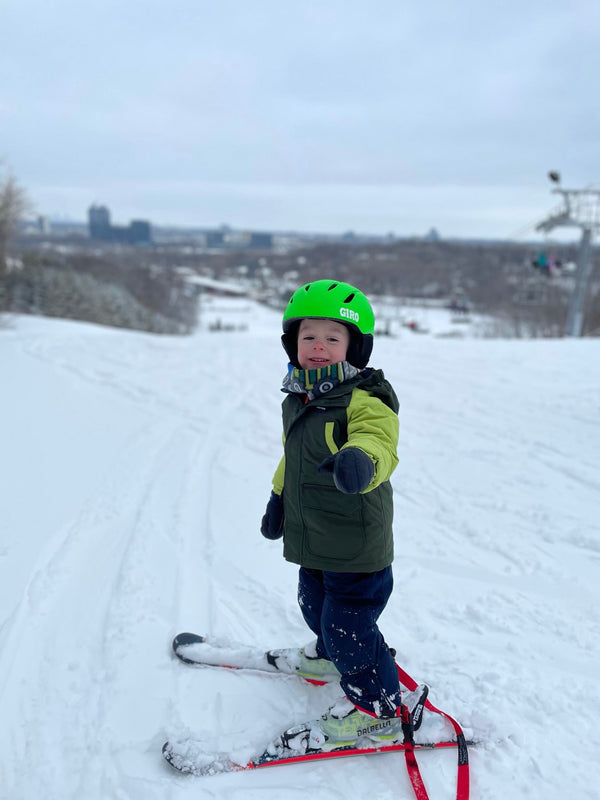
But if your goal is for your kid to fall in love with skiing? The answer is very different. That's what we focus on. Real skiing skills can come later. The love of it has to come first, and it can start younger than most people think.

What Ready Actually Looks Like
Ready isn't an age on a calendar. It's what I see in the kid in front of me.
Walking confidently on their own. Running. Jumping. Climbing. These aren't requirements, but they tell me something about where a kid is physically and how comfortable they are moving their body in space.
Beyond the physical stuff, I ask families a few questions before I give any advice.
What sports or activities does your kid like to do? Gymnastics and hockey count a little more than basketball or soccer, and it's not really about the sport. It's about the environment. Gymnastics kids are comfortable with body awareness and trying unfamiliar movements. Hockey kids have already been in skates, already know what it feels like to balance on an edge. Those kids tend to transfer to snow faster.
But the bigger question is simpler: is this kid comfortable showing up somewhere new and trying something they've never done? Some kids thrive in that environment. Some kids need six sessions just to get used to wearing a helmet. Both are completely normal. You just need to know which kid you have.
Here's something most people don't think about when they're asking "is my kid ready": a huge part of getting ready happens at home, long before you ever get to the hill.
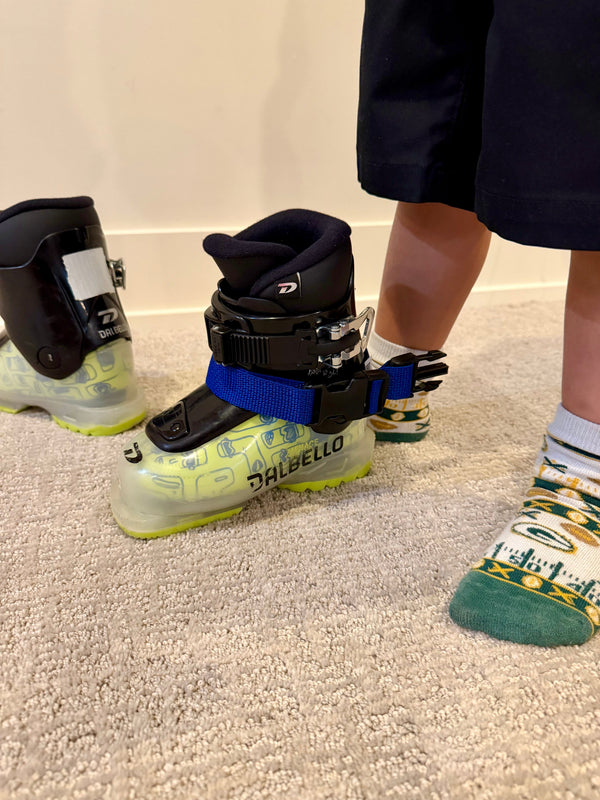
Putting a ski helmet on when you go sledding, or build a snow fort outside, instead of their regular hat. Setting up a tiny obstacle course in the living room that involves moving around in ski boots — not to teach skiing, just to get used to how heavy and stiff they are. Wearing goggles around the house for twenty minutes. Trying on the jacket and snowpants and just moving in them. All of these things make a bigger difference than most parents realize, and all of them are real wins in themselves.
The family that shows up at the hill with a kid who's already worn the helmet ten times and knows what "squish the marshmallow" means is going to have a completely different first day than the family that's doing all of that for the first time in the parking lot.
The other question I ask parents is the one that makes them pause: how much patience do you actually have?
Not how much you think you should have. Not the answer you'd give in front of other parents. How much you actually have, on a cold morning, when your kid is crying in the parking lot before you've touched the snow. When you've driven forty-five minutes and paid for lift tickets and your kid wants to go inside after two runs.
I'm not asking to judge, and I'm not trying to tell you this is going to be really hard and you're going to need superhuman reserves of patience or you'll fail. That's not the point. The point is that when you know what success actually looks like, you don't need as much patience, because you're not waiting for something that isn't going to happen that day.
Putting boots on for the first time and walking around the house is a win. Taking one run and being done and wanting hot cocoa is a great ski day. Taking three runs a day for a whole winter but absolutely refusing run number four, every single time, without exception: that's a skier in the making. Every kid has their own energy, their own needs, their own pace. Embracing that is essential to any activity, and especially to skiing, which asks so much of our little dudes' bodies in terms of equipment, environment, and unfamiliar sensations.
Know what you're looking for. Celebrate what you find. The patience takes care of itself.

What Happens When Parents Push Too Fast
When parents push too much too fast, everyone loses.
Kids feel that pressure and energy. They absorb it. What should feel like an adventure starts to feel like a test they're failing. And once that association is made, it's hard to undo.
Parents miss the milestones looking for the finish line. The first time a kid finds their balance on their own. The first time they look back up the hill with a smile instead of a grimace. The first time they ask to go again without being asked. Those moments happen, and they're everything. But if you're focused on the outcome, you miss them.
Parents also can't enjoy themselves when they're focused on the result. And kids know when their parents aren't enjoying themselves. It changes the whole day.
The best ski days I've been part of were never the ones where a kid hit some predetermined milestone. They were the ones where nobody was watching the clock.
So What's the Actual Answer?
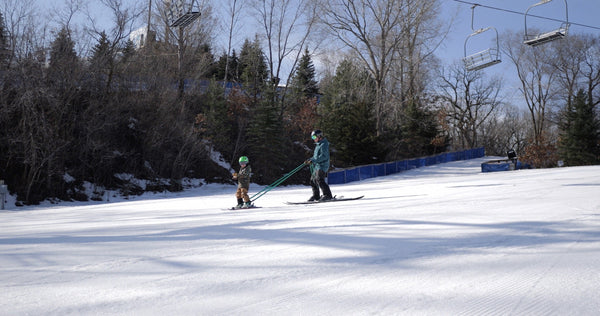
Somewhere around 2-3 years old is where I'm confident, depending on the kid and family. Not because younger can't work; I've had 19-month-olds out there and it was magical for completely different reasons. But for consistent, real progress that builds on itself? 2-3 is where I've seen it work reliably.
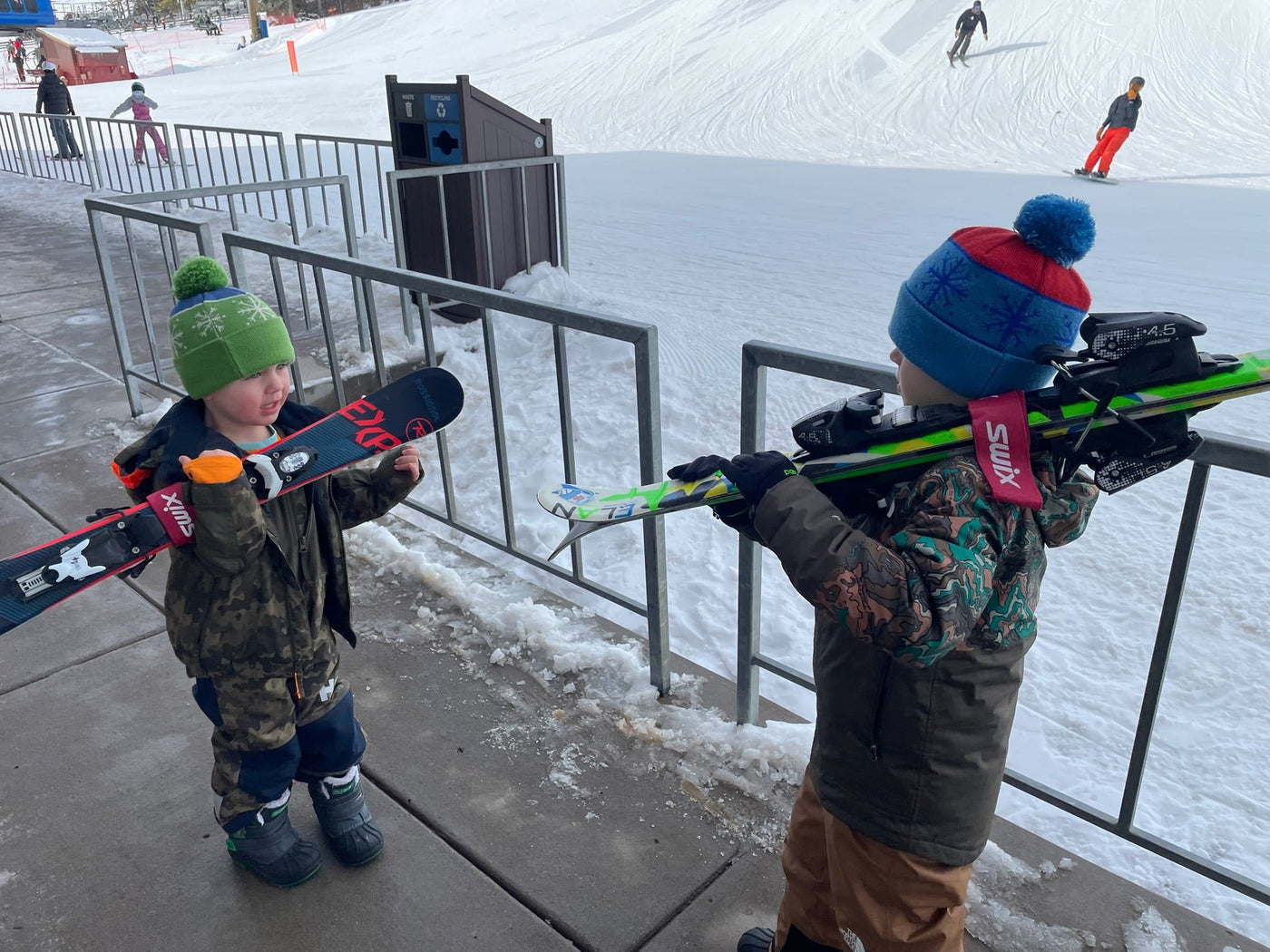
Most people say wait until four or five. Wait until kindergarten. Wait until it's worth spending the money. I disagree. I think it's worth building the foundation of a skier as young as you can. The real skiing skills come when they come. What you're building early is the relationship with snow, with the hill, with the whole thing.
Wait too long and you've got a seven-year-old who's never been on snow, already has opinions about being cold, and needs to be convinced that skiing is worth it. Start early and you've got a kid who doesn't remember a time when skiing wasn't part of their world.
That's the whole difference.

The One Thing I Want Parents to Know
Progress is going to look different than you expect. And that's okay.
Two runs and a hot cocoa is a great ski day for a three-year-old. One run where they found their balance for five seconds is a breakthrough. A day where nobody cried is a win. Meet your kid where they are at and you'll be amazed how fast they get where you're going.
The goal isn't to learn to ski at three years old so you can try out for the Olympic team when you turn four. The goal is to fall in love with skiing so you don't know what it's like to not be a skier.
Start when it feels right. Keep the bar low. Celebrate everything.
What's Next?
Once you decide you're ready to go, the next question is always: what do I actually need? Start with the boots. Everything else follows from there.
Read: How to Choose Kids' Ski Boots: An Honest Guide from a Real Ski Dad →