You've got the tethers. You're at the top of the bunny hill. Your kid is in boots. Now what?
This is where the Snap Two Ski tether really shines. This little tool gives you the opportunity to click it and start skiing right away. That's it. No tricks, no gimmick. Just start sliding, exploring, and uncovering how it needs to work for your kid right away.
Here's what I tell every parent before their first run, straight from the hill.
Getting Set Up
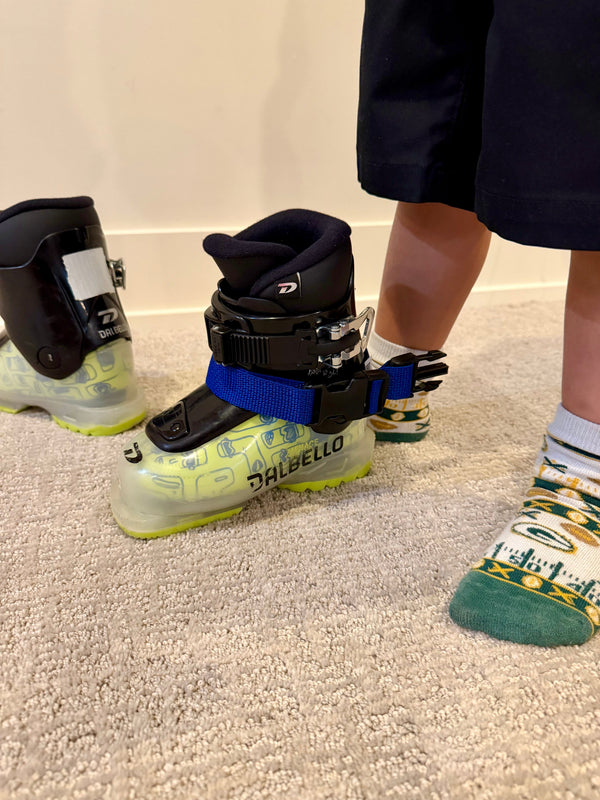
Start with the ankle pieces. Attach them inside and adjust the tail so it points back toward you. Buckles go on the outside of the boot, just like the boot buckles themselves. It will still work if you mix up a buckle, but setting it up right makes your life easier out there. That matters, too. Getting this over with inside before it's too cold or anything else is going wrong saves time on the snow.
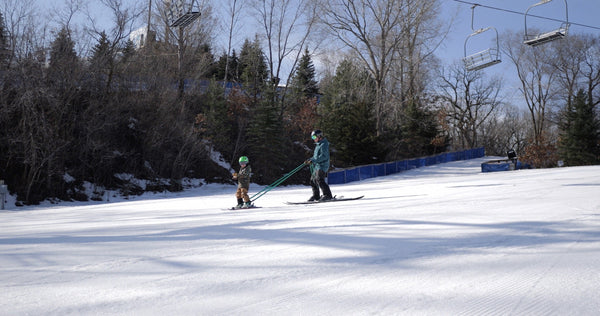
Once you're at the top of the hill, attach the control tether and hold it with both hands. Feel the connection to each boot. That's your starting point.
Before you go anywhere, just feel it. Two hands, equal tension, connected to the base of both skis. You're now one big long skier.
Want the quick step-by-step with photos? The How to Use page has the short version. This is everything I actually tell parents on the hill.
The First Run
This is an art, not a science. The second run will go smoother. The third run and you'll forget it was ever challenging.
Start by going straight. Let your kid get comfortable sliding before you add any other variables. Don't worry about turning, don't worry about stopping. Just slide!
Focus on your kid standing up tall. Not leaning back, not crouching down. Tall.
Here's something I say constantly on the hill and I'll say it here: avoid the "bend your knees" talk. Nine times out of ten, "bend your knees" makes a kid squat down and ski on their heels and tails. That limits every muscle group they have available to work with. Standing up tall allows for more use of their whole body. Try getting the nose in front of the toes instead. How they get there is up to them to figure out.
And go slow. If you feel like you're going slow enough, go a little slower. Seriously.
You'll know you've gone too slow when you accidentally stop!
What Your Body Is Doing
Remember that. You're one big long skier now, and that changes how you move.
I know you're a great skier back there. You do not need to show off. Use a pizza wedge to control your speed. Your skis control the speed for both of you. Your arms and the tethers are for fine tuning: bumps, dips, terrain management. Not for speed control. Use the wedge to slow your kid down, not your arms.
Keep equal tension in both handles from the start. Maintain it so you have something to work with when you actually need the control. That means both hands, both straps, both feet. Always.
This is constantly in motion, like balancing on one foot. You're never perfectly still, always adjusting. That's normal. That's the art part.
One more thing that's easier said than done: don't talk too much. Shouting a ton isn't helpful. Shouting "go left" to a three year old isn't going to work too well either. Try picking out landmarks instead. Name the sides of the trail something specific: "magic carpet side" versus "chalet side." Give them a visual to ski toward. That can work a lot better than playing traffic director from behind.

Why It Works (The Short Version)
When you anchor to the boots you're putting your attachment point at the skier's base of support. This way you're slowing things down from the bottom up, and encouraging your kid to use their body to figure it out.
When they start to make direction changes, they can start to feel the turns. Allow the experience to guide the learning, and let the turns do the work. When I'm working with kids using the system for the first time, I can see and feel when they're getting the hang of it.
Trust the process, trust your child, trust yourself. You're on the same team. Go explore what that looks like to conquer the mountain.
When It Goes Sideways
It will. That's just how it goes.
Distract, redirect, motivate, snack.
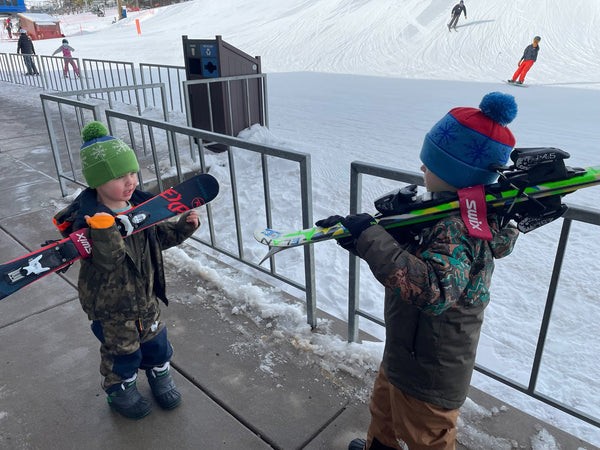
Snowballs are a great tool out there. Ski Vitamins rule this department. Taking a break and playing in the snow can be huge. A lot of what you're seeing is fear-based reaction, and that's normal. Just because your kid has a meltdown on the hill doesn't mean you failed as a ski parent. It happens. A lot. Sometimes a break is what's needed, and hot cocoa really does fix a lot of issues.
Remember: everything is new. Using the gear in any fashion is useful. Sitting on the snow and learning to stand back up is useful. Feeling how to manipulate the snow in their hands is useful. Celebrate the wins, no matter how small. That's how confidence gets built.
And do not underestimate the power of a good snack or a well-timed ski vitamin. Not only is there a motivation factor, there's a blood sugar issue at play. Kids are burning so much energy learning and processing: with their brains, physically moving in heavy hot gear on a frozen day, while everything around them is overstimulating and overwhelming. A little energy boost is great for the brain that's working overtime.

When to Take the Tethers Off
When your kid is making turns that slow them down, that's when you start thinking about life beyond the tethers. But every kid is on their own path. Even in your own family. Little brother might not follow the same formula as big sister did.
Here's what I'm watching for before I make that call:
Can they turn to slow down on command? Can they turn to slow down when they need to, not just when they want to? Can they make different sized turns, or just one big sweeping turn? Can they make a short turn to stop? Hockey stop?
When you start seeing those answers come up "Yes!" then it's time to introduce some stopping power before moving on completely. When in doubt: sit down and tip over to self-arrest on the slope. It sounds simple because it is. Introduce the wedge for slowing down in lift lines and at the bottom of the hill, as a backup move only. Let the turns do the work.

The Thing I Want You to Know Before You Go Out There
Run one looks pretty timid. Scared. A struggle to find what's too fast and what's too slow. I can see it happen in real time — the parents literally feeling it out, how much do I adjust with my arms, figuring out how to ski slowly without needing to look down at their skis the whole time. Really getting a feel with something brand new and foreign.
Here's how to make the first run a success.
Take it easy. Lower your expectations. Standing up and sliding straight is a major win for a little skier. Build confidence in one skill before switching gears to the next skill. If they ski straight down the hill without falling, do it 10 more times before thinking about turning. Don't go straight from "okay, he can stand up" right into pushing the next skill, or steeper, longer terrain right away.
Part of building that foundation is watching your words, not just their skis.
Don't tell your kids to bend their knees or make a pizza. Encourage them to stand up strong and just feel what it's like to slide down the hill. These are the lego bricks of building confidence and skill all over the mountain. This is the core memory foundation of "I can do this!" that they will carry into the biggest mountains on the planet someday.
Recognize and celebrate the "little wins" to turn them into confidence boosting building blocks.
Those are actually the most essential things. Would you expect your kid to hit home runs over the fence on their first day of tee ball? Would you expect them to be able to juggle a soccer ball 100 times at their first soccer practice at 5 years old? Recognizing the little wins teaches kids to recognize them for what they are: a big accomplishment. That builds confidence, but also helps your kid learn to build that confidence in themself. Recognizing and celebrating the "little wins" now will compound every day for the rest of their lives, way beyond the bunny hill.
Trust the process. Give it a shot. Focus on letting the kid explore the turn and let the turn do the work.
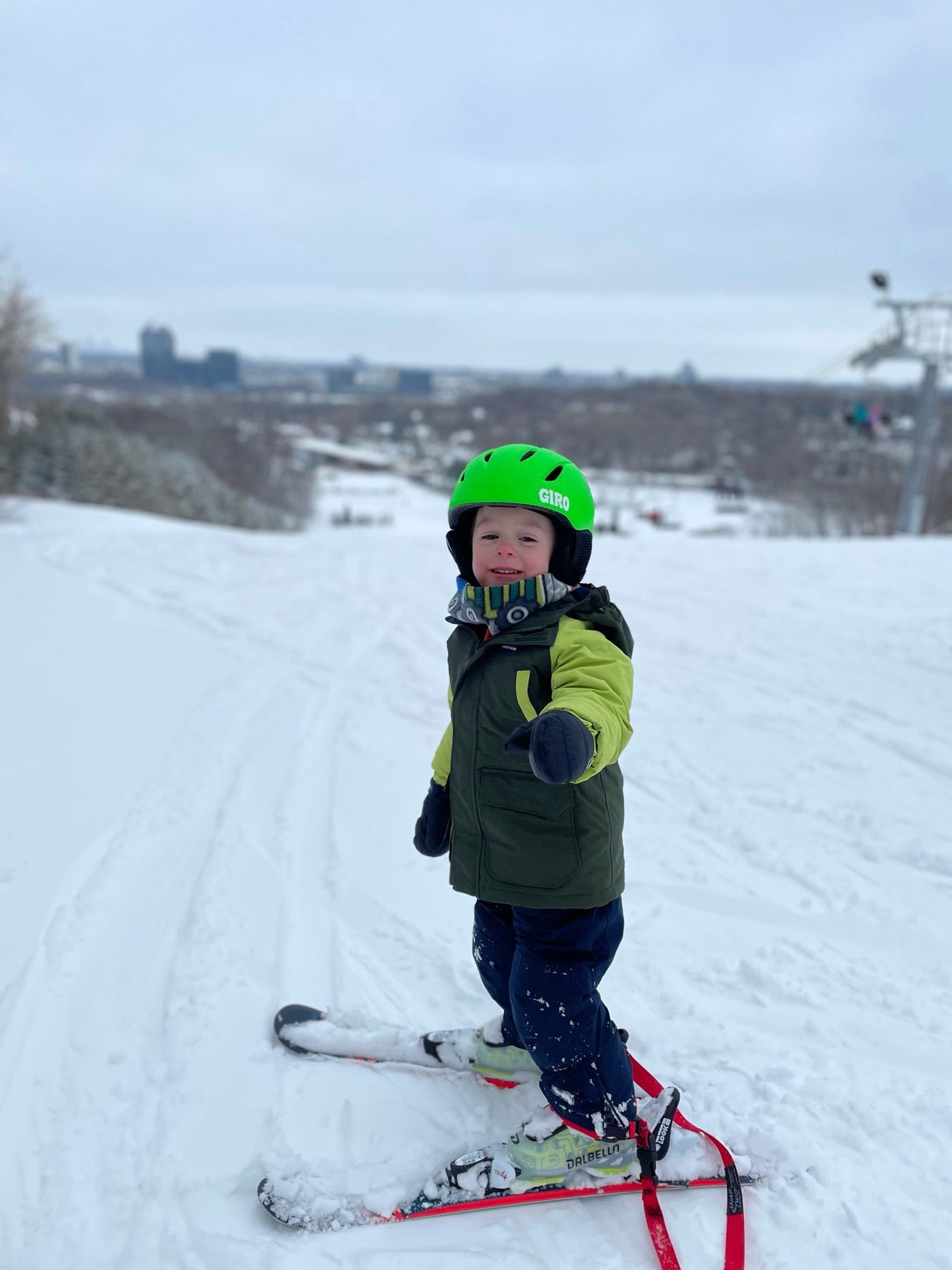
Snap a photo of your kid's first run and tag us. We want to see it.
Share Your Snap Two Moment →